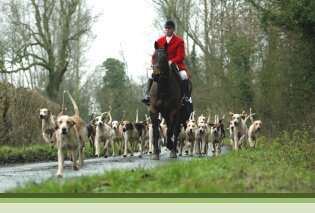
The Support Hunting Association is one of the UK's most prominent pro-hunting organisations, now incorporating issues related to Game Shooting, Fox Hunting and Angling.
About Us
|
Full Contents
 |
The menus below contain the full contents of the site.
| News Centre |
|
| Background Information |
|
| Information on Hunting |
|
| The Hunting Bill |
|
| Other Links |
|
 |
 Latest News RSS Feed Latest News RSS Feed |
|
|
Search our site
|
| Search our site using Google. |
|
WWW Supportfoxhunting.co.uk
|
|
Have you seen these pages?
|
|
Police View of a hunting ban - Two chief constables voice their concern on a ban on hunting.
Timelines -On the current Hunting Bill, the attempts to ban hunting, and on the ban in Scotland.
Hunting vs. Human Rights - Parliament has advised that the Hunting Bill is incompatible with the Human Rights Act.
|
Quotes
|
The ban has guaranteed that the time and money invested by the League Against Cruel Sports and the RSPCA has increased animal suffering. We told them this would happen. This rise in suffering since the ban is the cost of ignoring that warning!
Daily Telegraph
3 May 2005.
Numerous police officers accompanied the more than 250 hunts which took place yesterday, the first day that the sport became illegal. Despite the friendly exchanges between officers and huntsmen and women, the presence of the police posed a question: what public good were they trying to uphold?
Daily Telegraph
20 February 2005.
|
|
|
| Police chiefs 'dread' enforcing hunt ban - 3 July 2003 |
Police chiefs warn the Government today that a blanket ban on fox-hunting would be almost impossible to enforce.
One chief constable says that he will not spend precious resources snooping on people hunting on private land, and that he will put action against illegal hunts behind dealing with road accidents and robberies on his list of priorities.
 |
| Alastair McWhirter is Suffolk Constabulary's Chief Constable. |
Writing in The Times on the day the Hunting Bill goes to a Commons committee after Monday’s overwhelming vote for an outright ban, Alastair McWhirter says the new law fills police officers with dread.
Mr McWhirter, who is Chief Constable of Suffolk and rural spokesman for the Association of Chief Police Officers, expects widespread flouting of the law. He thinks people will wear ordinary clothes instead of hunting jackets and claim that they are simply out riding with their dogs.
He also highlights practical problems, such as how to arrest hunters when they are on horseback and what to do with the horses and hounds that must be seized if they are used for hunting. “If people are arrested they will have to be taken to a station and that will take several hours. Where do we put all the animals and how do we take control of them? Very few police officers are qualified to deal with horses and dogs and we haven’t got large areas for stables. Should police be using their budgets to build stables?”
| " |
We usually put up pictures of people wanted in connection with a riot or other illegal activity. But will we get the support of the public on this?
|
" |
Alastair McWhiIrter
Chief Constable |
|
|
After years of being piggy in the middle between hunters and protesters, Mr McWhirter thinks things will get worse for the police. And he fears that, having secured a hunting ban, saboteurs will turn their attention to shooting and that people could get killed if demonstrators defied the guns.
With some 350 hunts in the country and about 250,000 people who take their dogs on individual hunts, the police surveillance task would be enormous — especially as most hunting takes place in isolated areas with minimal police presence. Mr McWhirter, who has never hunted or had any connection with field sports, also points out that policing a hunting ban did not figure on David Blunkett’s priorities for police, nor had it been raised by any local authority.
For his own part, he would always send officers to deal with a motorway accident or robbery before investigating an illegal hunt. And he would not use the force’s helicopter to look out for people hunting on private land. “Policing will be very difficult, depending on how many people decide to flout the law,” he says. “We certainly will not turn a blind eye to any illegal hunting, but we will have to prioritise.”
Mr McWhirter said that one way of enforcing the ban would be to film illegal hunting and then try to identify offenders in the same way as football hooligans are traced. But that would require a team of officers to identify people and then prove they were part of the hunt. He said: “We usually put up pictures of people wanted in connection with a riot or other illegal activity. But will we get the support of the public on this?”
Mr McWhirter speaks out with the approval of Chris Fox, the former Northamptonshire Chief Constable who is now the Acpo chief executive. He also has the backing of most other rural police chiefs, who prefer not to comment yet. At the moment, a third of the forces in England and Wales spend an average £543,000 a year policing hunts. Denis O’Connor, Chief Constable of Surrey, said: “If the rules change, the risk is that our resources will be devoured keeping the peace. “
PLEASE NOTE - © Times Newspapers Ltd 2003.
The text above is directly from The Times' article "Police chiefs 'dread' enforcing hunt ban" - access it below.
|
Related links
|
|
|
|