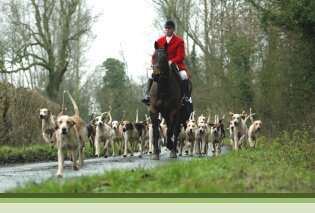
The Support Hunting Association is one of the UK's most prominent pro-hunting organisations, now incorporating issues related to Game Shooting, Fox Hunting and Angling.
About Us
|
Full Contents
 |
The menus below contain the full contents of the site.
| News Centre |
|
| Background Information |
|
| Information on Hunting |
|
| The Hunting Bill |
|
| Other Links |
|
 |
 Latest News RSS Feed Latest News RSS Feed |
|
|
Search our site
|
| Search our site using Google. |
|
WWW Supportfoxhunting.co.uk
|
|
Have you seen these pages?
|
|
Police View of a hunting ban - Two chief constables voice their concern on a ban on hunting.
Timelines -On the current Hunting Bill, the attempts to ban hunting, and on the ban in Scotland.
Hunting vs. Human Rights - Parliament has advised that the Hunting Bill is incompatible with the Human Rights Act.
|
Quotes
|
The ban has guaranteed that the time and money invested by the League Against Cruel Sports and the RSPCA has increased animal suffering. We told them this would happen. This rise in suffering since the ban is the cost of ignoring that warning!
Daily Telegraph
3 May 2005.
Numerous police officers accompanied the more than 250 hunts which took place yesterday, the first day that the sport became illegal. Despite the friendly exchanges between officers and huntsmen and women, the presence of the police posed a question: what public good were they trying to uphold?
Daily Telegraph
20 February 2005.
|
|
|
| The Hunting Bill 2003-2004 |
| This page was frozen on 31st December 2005 and is no longer updated, some of the information may be outdated and some links may no longer work. |
On the Horizon
|
Latest Update
Update - 24 July 2004
All newspapers are now speculating widely about the re-introduction of the Hunting Bill - now expected just after summer to allow the Parliament Act to be used if the House of Lords again reject a total ban on hunting.
On Thursday 22nd July, Peter Hain, who is in charge of Commons business did not announce the Bill's reintroduction but did not give full details of the business for the week when MP's return after summer - allowing the bill to be 'sneaked' in at the last minute by the Government.
It is widely expected that a bill will be re-introduced - what it contains, whether the Government decide to use the Parliament Act, and whether it becomes law are to be seen - any ban on hunting will be fought all the way to the European Court of Human Rights, as its compatibility with the Human Rights Act has been put into doubt by the Governments own advisors.
Writing to hunt supporters amid reports that the Hunting Bill will soon be back on the agenda - Simon Hart - the Chief Executive of the Countryside Alliance said: "We must... remind the Government that the notion of a hunting ban is deeply unpopular with the police and the magistrates service, and despite what Mr Peter Hain may have said, has received comprehensive opposition from Labour members of the House of Lords. Furthermore, the Government knows that further movement on the Hunting Bill will spark a significant legal challenge of the use of the Parliament Act as well as dropping it straight into controversy surrounding the Human Rights Act.
For the related newspaper stories, see The View of the Press.
Time for quiet consideration?
Since the last bill was dropped in the Lords - the hunting issue has gone quiet. However, Peter Hain has continued to argue that because Conservative peers 'abandoned' the bill it must be brought back.
Several newspapers have reported the imminent introduction of a bill totally banning hunting, but that it would not be sent to the Lords until after the hereditary peers have been removed.
The fact that even if no Conservative or hereditary peers had voted, the bill would still have fallen, seems to have missed Peter Hain - he continues to lie unreservedly.
One major obstacle to a Hunting Act is its incompatibility with the Human Rights Act - to comply with it, hunting could effectively only be banned in public places and taxpayers money would have to be paid in compensation to those affected when an bill came into force.
The Queens Speech
The Options
The Queen's Speech omitted the government's future plans on Hunting, their main options are:
- Drop the Hunting Bill - the bill ran out of time in the House of Lords, the government has not specifically announced it's re-introduction in the Queen's Speech, so it could attempt to ignore it, however Labour backbenchers are likely to make this very hard.
- Introduce the bill - claiming it was under the 'other legislation' section at the end of the speech. It's reintroduction could be when backbench Labour MPs are threatening to revolt over a key policy, such as tuition fees.
- The government may back the introduction of a 'private members bill' - effectively washing their hands of the issue, but at the same time supporting its passage through parliament.
What the Government is saying
The official response - given by Peter Hain to both the BBC and Sky - just after the speech is that 'the issue of hunting will be resolved at a later stage, it was not mentioned in the speech because there was no need for it to be.'
The Prime Minister was asked by one of his MPs whether 'it will be banned by the next election' - Tony Blair referred to Peter Hain's comments, adding it would be 'resolved this session'.
The Telegraph reported, 'A succession of Labour backbenchers expressed dismay during a heated meeting of the Parliamentary Labour Party attended by Peter Hain, the Leader of the House, and John Prescott, the Deputy Prime Minister.'
The Guardian has reported, 'Gordon Prentice, one of the most vociferous campaigners against fox hunting, accused Mr Blair of allowing himself "wriggle room" by only committing himself to deal with the issue by the next election rather than in the new session of parliament. If the government fails to act within the next year it will be unable to use the Parliament Act to force through a bill against the will of the House of Lords.'
Rightfully, the Countryside Alliance warned that it would oppose any attempt to use the Parliament Act to impose a ban by applying for a judicial review.
The Human Rights Act
The Hunting Bill and Human Rights
The current bill has failed to pass the parliamentary Joint Committee on Human Rights because of two key areas of the draft Bill that would put it at risk of claims under the Human Rights Act, they are:
- The failure to provide compensation to those who will be affected - including all those who will lose their jobs, farriers, kennel owners and stable owners.
- The right to stop hunting on private land, and whether ministers have that right. The Times reported “Members want to know whether it is justifiable to restrict what people do on private property in the public interest. It is a question of proportionality".
DEFRA were asked to respond to the issues and their response has failed to satisfy the committee. This issue will need resolving if the government introduces the bill.
Links to stories related to the House of Lords debate on the Hunting Bill (October 2003)
The transcript of the Second day of the Committee Stage in the House of Lords
UK Parliament | 28th October 2003
The transcript of the First day of the Committee Stage in the House of Lords
UK Parliament | 28th October 2003
"Hunting Bill Timed out in the House of Lords"
Countryside Alliance Factsheet | 28th October 2003
Letter from Baroness Mallalieu and others in the House of Lords: "How Hunt bill died"
Guardian (Letters) | 6th November 2003
"80% of labour peers fail to support Governments Hunting Bill"
Countryside Alliance Press Release | 23rd October 2003
"Lords 'un-wreck' Hunting Bill"
Countryside Alliance Press Release | October 2003
"Prime Minister Official Spokesman: Press Briefing"
pm.gov.uk | 29th October 2003
"Prime Minister Official Spokesman: Press Briefing"
pm.gov.uk | 21st October 2003
|
Timeline of the 2003 Hunting Bill
|
Coming Up...
Possible introduction of a Hunting Bill, leading to challenge under the Human Rights Act, and another 'last boxing day hunt' this year?
1st November 2003
On Saturday 1st November, as the hunt season began, thousands of hunt supporters turned out to show their support for hunting. There was also 36,000 signatures added to the Hunting Declaration. However, on Sunday the 2nd, Leader of the House of Commons, Peter Hain - a known total-ban supporter, pledged to re-introduce the bill in the Queens speech.
Click Here for the full report.
28th October 2003 - Committee Stage continued
Peers voted by a majority of 70 (129 vs. 59) to delete the ban on hare coursing, they also introduced an amendment allowing fox hunting to continue for the protection of sheep in National Parks. Environment Minister Lord Whitty accused peers of "destroying the basis" of the bill - a bill which is a prejudiced waste of parliamentary time.
They then voted to adjourn the debate because of a lack of time to continue debating it. The Hunting Bill therefore did not complete the passage through the House of Lords and did not become law.
21st October 2003 - Committee Stage
Peers voted by a majority of 212 to re-instate the registration of fox hunts, led by Baroness Mallalieu, 80% of Labour peers failed to back the bill that left the Commons (a total ban on hunting).
16th September 2003 - Second Reading
The Hunting Bill had its second reading in the House of Lords, where it was clear that they would reinstate the original text of the bill - the registration of hunting.
9th July 2003
The Hunting Bill had its second committee stage, third reading (317 votes to 145) and was sent to the House of Lords.
1st July 2003
Rural Affairs Minister Alun Michael said he believed hunting would be banned by 2005.
30th June 2003 - Third Reading
In an extraordinary move, Rural Affairs Minister Alun Michael withdrew the government amendment, which was intended to strengthen the bill in order to satisfy Labour MPs. This lead the way for Labour backbencher Tony Banks to table his amendment calling for a total ban on hunting. It was passed by 362 votes to 154, a majority of 208. MPs also voted against allowing dogs to hunt underground and to ban mink hunts. The bill was recommitted to its standing committee.
27th June 2003
In the second report in two days regarding the Prime Ministers stance on the upcoming report stage of the Hunting Bill, the Guardian reported that the Prime Minister warned backbencher MPs not to push for a total ban, because they risk losing the whole Bill if they do.
26th June 2003
In a press release out yesterday, the minister in charge of the Hunting Bill, Rural Affairs Minister Alun Michael, announced that Government amendments just tabled for Monday's report stage of the Hunting Bill will ensure strong and enforceable law to outlaw the cruelty associated with the sport of hunting with dogs. He said, "this Bill will eliminate cruelty in hunting with dogs. It means the end of the prolonged chase and killing of wild mammals just for sport. As the Bill stands, deer and hare hunting and hare coursing are banned outright, as is using a dog below ground."
Meanwhile, The Independent newspaper reported that Tony Blair has told his MPs that he will not block a ban on Fox Hunting on condition that it does not ruin the Governments legislative programme.
21st June 2003
A challenge to overturn the Scottish ban on hunting failed. We reported that on June 5th, two members of the Union of Country Sports Workers had challenged the Protection of Wild Mammals (Scotland) Act at the Court of Session.
In his judgment, Lord Brodie rejected the two men's arguments. He said: "Cruelty . . . involves a moral judgment. If a democratic parliament takes the view that a practice is cruel then it can be said that in banning or restricting that practice parliament is acting to protect public morals."
19th June 2003
Labour's chief whip, Hilary Armstrong, delighted MPs by saying the much delayed report stage on the hunting bill would be held on Monday June 30. The bill completed its committee stages more than two months ago, but the government has delayed the report stage, the final stage in the Commons procedure.
Also, in the second major development in two days, the new Leader of the Commons, Peter Hain, who yesterday announced a vote on a total Hunting ban, warned the House of Lords not to block the Hunting Bill.
17th June 2003
An NOP poll for the Countryside Alliance found that only 2% of the public believe that Commons time should be used to pass the Hunting Bill, suggesting that Downing Street would not pay a high political price if it dropped the bill.
13th June 2003
The Times reported that a leaked letter from Alun Michael, the Minister in charge of the Hunting Bill to Deputy Prime Minister John Prescott, contained a plan to introduce a closed season for fox hunting, ending the vital autumn hunts. This amendment was introduced on 30th June 2003 but was rejected by MPs in favour of a total ban.
5th June 2003
MPs published a new scientific report that shows that an impact of the Hunting Bill may be an increased number of foxes wounded.
29th May 2003
A study carried out by the University of Kent, and published in the journal 'Nature' found that landowners involved in both hunting and shooting maintain their woodland and hedgegrows to a much better degree than those who are not.
2nd April 2003
Ministers postponed further debating of the Hunting Bill because of the war in Iraq. They believed that it would not be "appropriate" for MPs to vote on whether to ban the sport at a time when British servicemen are risking their lives.
17th January 2003
The Hunting Bill was amended to ensure hunting only takes place where it is needed to control foxes as pests, meaning it will no longer be able to take place as a traditional sport.
16th December 2003 - Second Reading
MPs voted by 368 to 155 in favour of the government's Hunting Bill and the Tory bid to stop the Bill failed. Most MPs, from Prime Minister Tony Blair's Labour Party, said they would press for a total ban later as the bill passes through parliament.
3rd December 2003 - First Reading
Rural Affairs Minister Alun Michael announced the government's latest plans for hunting in parliament.
The plan included allowing Fox Hunting to continue in some areas of England and Wales under licence, mink hunts would also be licensed, however, Hare Coursing and stag hunts would be banned. |
Comments on the Hunting Bill
|
The Bill was published on 3 December 2002 by Rural Affairs Minister Alun Michael, at the conclusion of the Committee Alun Michael said:
 When I published the Hunting Bill I said I would welcome constructive debate and improvement, to help develop legislation that will stand the test of time. I am pleased that the animal welfare provisions of this Bill have been strengthened and its content clarified as a result of debate in Committee.

Whilst, Richard Burge, Chief Executive of the Countryside Alliance, commented:
The Countryside Alliance welcomes political decisions based on principle and evidence. It has, however, become ever clearer that the Minister has thrown both principle and evidence aside in favour of a politically expedient approach at the expense of animal welfare.
He has connived with other opponents of hunting to make this Bill a total ban in all but name.
Throughout the Committee Stage he has failed to produce any evidence which could possibly support what he has done. Mr. Michael cannot expect any fair-minded person to accept this
The future of hunting summed up...
W F Deedes, writing in the Telegraph has summed up the future of hunting in a single article:
"Has this Government ditched foxhunting, or might the end of foxhunting ditch this Government? The next election will be close, and I suspect the Prime Minister was right in supposing that an outright ban could well turn out to be a minus rather than a plus for Labour...
What does my MP think of hunting?
Click Here to find out
|
General Information
|
The Future...?
As mentioned, we are waiting to see if the Government is going to re-introduce the bill in the Queens Speech.
After the House of Commons ignored the government's efforts at compromise and voted Monday for a total ban, Prime Minister Tony Blair is again struggling to settle the issue. And he dares not alienate voters on either side of the passionate debate.
"The House of Commons has spoken, and we have to respect the result of the free vote,'' Blair's official spokesman said Tuesday, a day after a majority of lawmakers called for an outright ban and overturned the government's Hunting Bill, which proposed strict controls.
To overcome this, the Government can use the Parliament Act to 'force' the bill through the House of Lords. It is unsure whether the Government is willing to use this. Should it chose to, the earliest a ban could be imposed is 2005, as Lord Donaldson of Lymington wrote in the Times:
"Under the Parliament Act 1911 a Bill can be presented to the Queen for the Royal Assent if it has been passed by the House of Commons in three successive sessions and is rejected by the House of Lords in each of those sessions. If this is the law, the earliest date upon which a ban [on hunting] could be achieved would be in 2005." (Click here for the full article).
The basics of the bill were...?
Hunts were required to pass two tests, in order for hunting to continue - The 'Utility' test, which was to demonstrate that hunting was necessary to control foxes as a pest, and the 'Cruelty' test was to ensure that hunting was the least cruel method.
Working terriers underground has been banned, however the guardian believe that "this an area the government may revisit after protests from gamekeepers and animal welfare organisations which fear fox cubs could be left to starve to death in their dens if their mothers have been killed."
The position has now changed, so that all hunting of wild mammals has been banned, making the legislation stronger than the Scottish version.
Was the bill 'fair'...?
The Bill was designed as a compromise between the status quo and a total ban on fox hunting which was called for by the majority of MPs - Alun Michael called it "tough but fair" - it was never that, and was put into a biased committee and has never been a fair bill.
|
Members of the Committee stage
|
Below is the list of the MPs in Standing Committee F, which debated the Hunting Bill.
KEY:
PARTY: The Party to which each MP belongs in shown on the far left
HOW THEY VOTED: If they voted for a total ban (in favour of Tony Banks' amendment on 30th June), there is an 'X' next to their name.
 |
|
Labour
|
|
|
|
Conserv.
|
|
|
|
Lib Dem
|
|
|
|
Plaid Cymru
|
|
|
X
|
Ainger, Mr. Nick (Carmarthen West & Pembrokeshire South; Lord Commissioner to the Treasury) |
|
|
|
Atherton, Ms Candy (Falmouth and Cambourne) |
|
|
|
Banks, Mr. Tony (West Ham) |
|
|
|
Barker, Gregory (Bexhill and Battle) |
|
|
|
Bradley, Peter (The Wrekin) |
|
|
|
Brown, Mr. Russell (Dumfries) |
|
|
|
Cawsey, Mr. Ian (Brigg and Goole) |
|
|
|
Flook, Mr. Adrian (Taunton) |
|
|
|
Foster, Mr. Michael (Worcester) |
|
|
|
Garnier, Mr. Edward (Harborough) |
|
|
|
George, Andrew (St. Ives)* |
| |
|
Gray, Mr. James (North Wiltshire; was Shadow minister for rural affairs) |
|
|
|
Gummer, Mr. John (Suffolk, Coastal) |
|
|
|
Hall, Mr. Mike (Weaver Vale con) |
|
|
|
Holmes, Paul (Chesterfield lib dem) |
|
|
|
Luff, Mr. Peter (Mid-Worcestershire) |
|
|
|
Mallaber, Judy (Amber Valley) |
|
|
|
Marris, Rob (Wolverhampton, South-West) |
|
|
|
Martlew, Mr. Eric (Carlisle) |
| |
|
Michael, Alun (Cardiff South & Penarth; Minister for Rural Affairs) |
| |
|
Morley, Mr. Elliot (Scunthorpe; Parliamentary Under-Secretary of State for Environment, Food & Rural Affairs) |
|
|
|
Öpik, Lembit (Montgomeryshire) |
|
|
|
Organ, Diana (Forest of Dean) |
|
|
|
Pickthall, Mr. Colin (West Lancashire) |
|
|
|
Reed, Mr. Andy (Loughborough) |
|
|
|
Soames, Mr. Nicholas (Mid-Sussex) |
|
|
|
Swire, Mr. Hugo (East Devon) |
|
|
|
Tami, Mark (Alyn and Deeside) |
|
|
|
Tipping, Paddy (Sherwood) |
|
|
|
Whitehead, Dr. Alan (Southampton, Test) |
|
|
|
Williams, Hywel (Caernarfon) |
|
*George, Andrew (St. Ives) did not vote on 30th June 2003, but voted for a total ban in all previous votes.
Chairmen: Mrs. Marion Roe, Mr. George Stevenson
Committee Clerk: Mr. A. Sandall
|
|