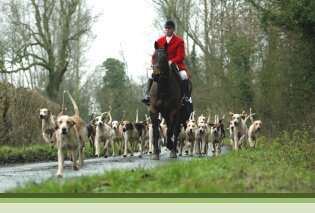
The Support Hunting Association is one of the UK's most prominent pro-hunting organisations, now incorporating issues related to Game Shooting, Fox Hunting and Angling.
About Us
|
Full Contents
 |
The menus below contain the full contents of the site.
| News Centre |
|
| Background Information |
|
| Information on Hunting |
|
| The Hunting Bill |
|
| Other Links |
|
 |
 Latest News RSS Feed Latest News RSS Feed |
|
|
Search our site
|
| Search our site using Google. |
|
WWW Supportfoxhunting.co.uk
|
|
Have you seen these pages?
|
|
Police View of a hunting ban - Two chief constables voice their concern on a ban on hunting.
Timelines -On the current Hunting Bill, the attempts to ban hunting, and on the ban in Scotland.
Hunting vs. Human Rights - Parliament has advised that the Hunting Bill is incompatible with the Human Rights Act.
|
Quotes
|
The ban has guaranteed that the time and money invested by the League Against Cruel Sports and the RSPCA has increased animal suffering. We told them this would happen. This rise in suffering since the ban is the cost of ignoring that warning!
Daily Telegraph
3 May 2005.
Numerous police officers accompanied the more than 250 hunts which took place yesterday, the first day that the sport became illegal. Despite the friendly exchanges between officers and huntsmen and women, the presence of the police posed a question: what public good were they trying to uphold?
Daily Telegraph
20 February 2005.
|
|
|
| It's too risky to halt hunts, say police chiefs - 5 June 2005 |
Police have been told not to foil illegal fox hunts when the hunting season begins because of health and safety regulations.
Guidance drawn up by police chiefs instructs officers to take the most cautious approach when investigating reports of illegal hunts for fear that they might injure themselves. They have been told not to go near hounds or horses and not to confiscate dead animals as evidence in case of injury or infection.
Officers are also told to carry out risk assessments before embarking on an investigation; to ask farmers for permission to go on their land; and not to use police helicopters in case they "cause alarm to horses".
Pro-hunt campaigners said that the guidance showed that the Hunting Act of 2004 was completely unenforceable.
The guidance, released under the Freedom of Information Act, is intended to prepare officers for the start of the first full hunting season since the ban, which begins in autumn.
In the 30-page document, released by two constabularies - Gloucestershire and Devon and Cornwall - police chiefs make clear: "Police officers will not routinely be deployed to hunt meetings." If officers are deployed it will only be after a detailed "risk assessment completed on the deployment of that officer or team by a responsible person. Appropriate support must be considered.
"In addition, all police officers deployed must be adequately briefed on their role, legal constraints and on their health and safety."
Far from chasing across fields, any officer sent to investigate a hunt should "record all available evidence (visual or verbal) in the most appropriate manner, by pocket notebook".
It makes clear that they should not try to catch an illegal hunt taking place but wait until it has run its course before investigating. When they do so, they should ask for permission from farmers. "The Act does not give any power of entry on to land to allow a police officer to gather evidence. Therefore all police officers must make sure they have the landowner's express permission to be on that land." It advises officers to use the new Countryside and Rights of Way Act to see whether they have access to a particular piece of land.
On gathering evidence, it says: "It is not recommended that any police officer investigating an alleged breach of the Act takes possession of the carcass of any dead fox, deer or other animal." The guidance instructs officers never to try to seize horses and to seize hounds only in exceptional circumstances. Courts should always be made aware of the "limited ability of the constabulary to handle any dogs". In conclusion, it says that it might be "more appropriate" for an individual or organisation to take a civil or private action against an illegal hunt rather than have police embark on a criminal investigation.
Commenting on the guidance, Tim Bonner of the Countryside Alliance said: "The Government has to answer for putting police forces across the country in a ludicrous situation where they have to waste time and resources on checking that foxes are culled by approved methods when they should be tackling real crimes."
PLEASE NOTE - © Telegraph Group Limited 2005.
The text above is directly from The Daily Telegraph article "It's too risky to halt hunts, say police chiefs" - access it below.
|
Related links
|
|
The Daily Telegraph | 5 June 2005
|
|
|