The Westcountry's top police officer has voiced concerns about the impact that a hunting ban would have on her force.
Maria Wallis, Chief Constable of Devon and Cornwall Police, told the Western Morning News she was worried that the Hunting Bill currently going through Parliament could, if enacted, strain police resources and damage officers' relations with rural communities.
 |
| Maria Wallis is Chief Constable of Devon and Cornwall Police. |
Senior officers in other rural forces have warned that the proposed outright ban on hunting could be extremely difficult to enforce.
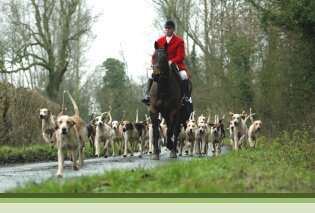
More than 50,000 hunt supporters - including thousands in the Westcountry - have signed declarations saying they will continue hunting after any ban. Police fear that it would be "impractical" to seize their hounds and horses if this happens.
Mrs Wallis stressed that it was "very difficult" to assess the effect a hunting ban would have on Devon and Cornwall Police until any legislation was finalised.
She pointed out that the subject had not been mentioned at Friday's police authority meeting, when police priorities for 2004-05 were discussed, and that the new annual policing plan contained nothing specific about hunting.
"I am aware that members of our communities in rural areas are engaged with hunts and that it is a very important part of their lives," she said. "I also understand that many people are very opposed to it.
"As ever with policing, we need to allow people to do things that are legal and protest lawfully, and to ensure that the balance is right.
| " |
You could end up with a law that has been passed, that nobody adheres to and is unenforceable - how do you confiscate a pack of hounds and 40 horses?
|
" |
Maria Wallis
Chief Constable |
|
|
"But I do not have any dedicated resources to do this - to police hunts, the resources have to come from elsewhere.
"Our new style of policing is very much about engaging with neighbourhoods. I am concerned that a hunting ban could cause difficulties, but we will have to wait and see how this will work out - I will watch with interest."
Alison Hawes, South West regional director of the pro-hunting Countryside Alliance, said a hunt ban could turn a "law-abiding, peaceful group of people" into criminals.
She added: "You are going to have a situation where the police are going to have to decide whether they are going to police the inner city trouble spots or burn around Exmoor and Dartmoor on quad bikes trying to find people who are hunting.
"You could end up with a law that has been passed, that nobody adheres to and is unenforceable - how do you confiscate a pack of hounds and 40 horses?"
But Peter Anderson, South West spokesman for the anti-hunting League Against Cruel Sports, argued that in practice "very few" people would break any ban. "This is a bit of a red herring that has been put out by the hunting lobby," he said.
"It will be enforceable and it will be enforced. We may not like what they do, but the vast majority of hunt supporters are law-abiding people."
He also claimed that hunts were already a "not insubstantial" drain on police resources.
"There are hunts that week-in, week-out have a police presence," he added. "In Devon and Cornwall, I know there is a significant presence, and that is not just where anti-hunting demonstrators are.
But Ms Hawes strongly denied this claim, saying: "Hunts themselves need no policing. The only time police are required is when hunt saboteurs turn up and cause trouble."
Jill Owen, chairman of Devon and Cornwall Police Authority, said it was too early to assess the effect a hunt ban would have on the force's resources. PLEASE NOTE - © Western Morning News 2004.
The text above is directly from The Western Morning News article "Chief Constable fears for hunt ban policing" - access it below.
|













 Latest News RSS Feed